
SDI Solo Diver
SDI Solo Diver
Self-reliant. Fully prepared. Completely independent. The SDI Solo Diver course is one of the most rigorous and rewarding specialties available — teaching experienced divers to plan, execute, and manage dives entirely on their own, with the equipment, skills, and mindset to back it up.
Who This Course Is For
One of SDI's most popular specialty courses — and not just for divers who want to dive alone. The self-reliance skills taught in this course make you a stronger, more prepared diver in any situation.
Course Prerequisites
Not yet at 100 dives? Call us — we can help you plan the path to get there ?
What You'll Learn
The Solo Diving Framework
- Why solo dive — the history and evolution of self-reliant diving
- Pros and cons of buddy diving vs. solo diving
- Legal liability and the SDI Solo Diving waiver and release
- Who must solo dive — professional and operational contexts
- The solo diving mentality — when it's appropriate and when it's not
Equipment for Solo Diving
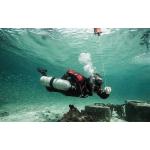
- Redundant air supply — types, selection, and configuration
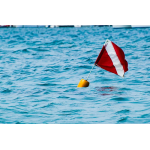
- Surface marker buoys (SMBs) and deployment procedures
- Audible and visual signaling devices
- Dive computer and decompression monitoring equipment
- Equipment configuration appropriate for solo diving conditions
Planning & Execution
- Planning dive limits based on personal air consumption rate (SAC/RMV)
- Pre-dive planning to professional standard
- Navigation with compass — demonstrated proficiency required
- Proper descent/ascent rates and safety stop procedures
- Executing a planned dive within all predetermined limits
Emergency Management
- Managing solo diving emergencies without a buddy
- Emergency changeover to redundant air supply (max 30m/100ft)
- SMB deployment from depth
- Use of audible signaling devices on the surface
- Accident prevention and personal limitation awareness
Required In-Water Skills
The physical requirements for this course are among the most demanding of any SDI specialty — reflecting the serious nature of solo diving.
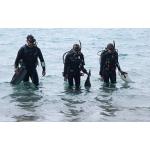
- 200m/600ft surface swim in full scuba equipment — non-stop, in open water, configured for local diving conditions
- Demonstrate thorough pre-dive planning including personal SAC rate calculations
- Plan and execute a complete dive within all predetermined limits
- Demonstrate compass navigation proficiency
- Emergency changeover to redundant air supply at depth
- Deploy a surface marker buoy (SMB) from underwater
- Use of audible signaling device on the surface
- Proper safety stop, ascent, and post-dive logging
What You Get Out of It
Upon completion you're certified to conduct solo dives independently — no instructor supervision required — as long as conditions approximate your training. Your SDI Solo Diver certification counts as a specialty credit toward both the SDI Advanced Diver Development Program and the SDI Master Scuba Diver Development Program.
Complete Diving Independence
Dive on your schedule, at your pace, at your dive site — without coordinating a buddy. Full freedom for the experienced diver.
Stronger Buddy Diver Too
The self-reliance skills you build here make you a dramatically better dive partner. You become the diver everyone wants as their buddy.
Perfect for Photographers
Underwater photography and video demand full focus on the shot. Solo Diver training builds the self-sufficiency that makes that possible safely.
Counts Toward Master Diver
SDI Solo Diver counts toward both the SDI Advanced Diver Development Program and the SDI Master Scuba Diver Development Program.
Explore More SDI Specialty Courses
Stack your skills. Each specialty makes you a more capable, confident diver — and they all count toward your SDI Master Diver rating.
Not sure which specialty to take next? Call us and we'll help you plan your path ?
Common Questions
Is solo diving legal and accepted?
Yes — solo diving, once considered purely a technical practice, is now widely accepted for properly trained and experienced recreational divers. SDI is one of the leading agencies to formally recognize and certify it. The course covers the legal and liability framework in depth.
What is a redundant air supply and do I need to own one?
A redundant air supply is a secondary breathing source independent of your primary tank — commonly a small pony bottle. It's a required piece of equipment for solo diving. We'll advise on options when you register.
Why is the minimum age 21?
Solo diving places full personal responsibility for safety on a single diver — no buddy to assist in an emergency. SDI sets the highest minimum age of any specialty to ensure candidates have the maturity, experience, and judgment the course and the practice demand.
Do I need Navigation Diver certification first?
Compass navigation proficiency is required as a demonstrated skill in this course. If your navigation skills are rusty, consider taking the SDI Underwater Navigation specialty first — it will make your Solo Diver training smoother and more effective.
Does Solo Diver count toward SDI Master Diver?
Yes — SDI Solo Diver counts as a specialty credit toward both the SDI Advanced Diver Development Program and the SDI Master Scuba Diver Development Program.
What Divers Are Saying
0 reviews for SDI Solo Diver
Write a review
Similar Products